
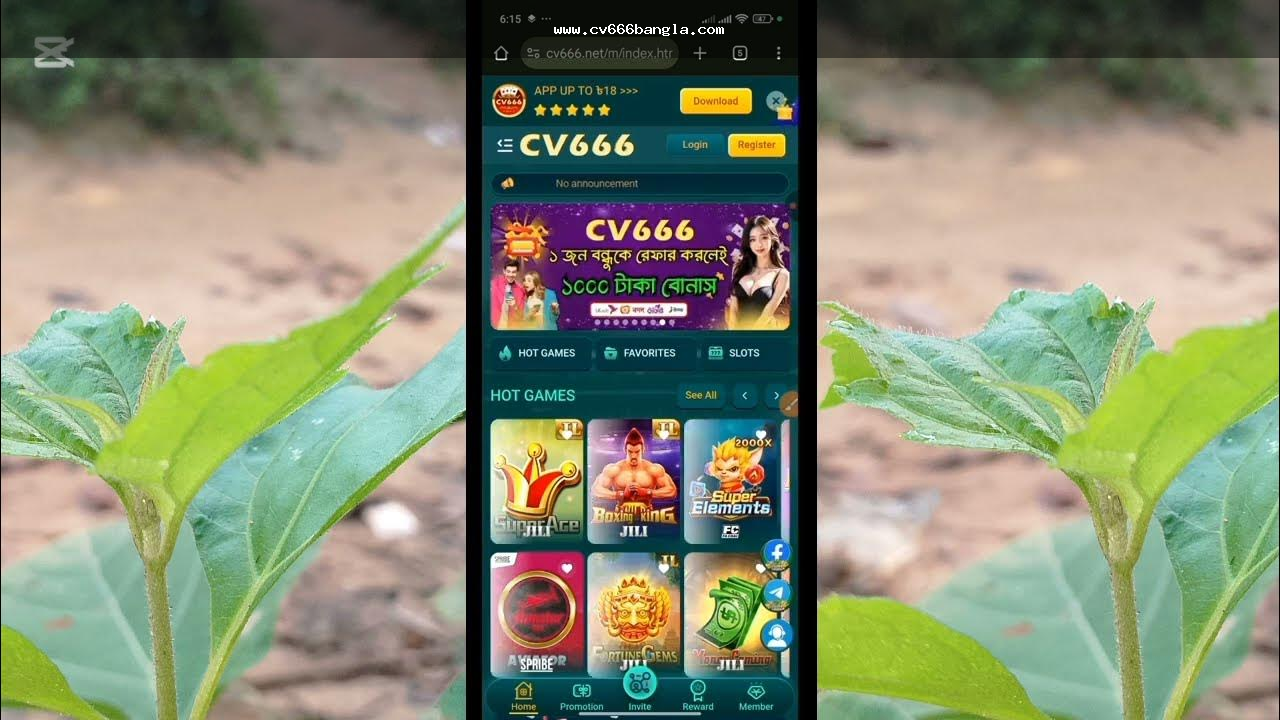
The biggest risk when logging into an online account is often not a wrong password, but rather entering the password on the wrong page. cv666 account verification Therefore, before proceeding, you must first understand—what page you are really on, what information is being requested, and whether any message is rushing you.
This guide is organized as a practical checklist for Bangladeshi users regarding account access, domain verification, credential safety, recovery alerts, and reducing phishing risks. No specific login link, official recovery flow, license, or platform claim is being confirmed here.
Check if the page is truly secure before logging in.
It is not correct to assume that a login page is safe just because it looks similar. Extra caution is needed for links coming from search results, social posts, messenger links, short videos, or “app download” pages.
Before logging in, check a few things:
- Whether the domain spelling is unusual.
- Whether there are unnecessary extra words, numbers, or symbols in the URL.
- Whether the page is redirecting repeatedly upon entry.
- Whether the same page is asking for login, payment, bonus claim, and OTP together.
- Whether the page is unusually pressuring—such as “account will be closed if not verified now.”
- Check if the browser auto-fill is automatically entering the password; if it does, verify the page first.
A good practice is to avoid providing credentials by clicking only on the first page of search results. First, check the URL, page language, behavior, and what type of information is being requested.
Signals of domain, redirect, and fake-login pages.
Fake-login pages are usually designed to look like the real page, so that users quickly provide their password, OTP, or payment details. These pages may sometimes request information under the guise of “verification,” “account unlock,” “bonus activation,” or “security update.”
| What you are seeing | Risk signals | What to do |
|---|---|---|
| The domain is almost the same, but the spelling is different. | It could be a typo or a clone page. | Stop before providing credentials. |
| Redirect to another page after going to the login page. | The source of the page is unclear. | Check again |
| Asking for OTP or payment PIN with the password | Phishing risk | Do not provide information |
| Threatening to close the account | Making decisions under pressure | Take your time to verify |
| Asking to send money before claiming the bonus | Unusual payment pressure | Suspend transactions |
| Asking for irrelevant permissions when installing APK | Device data risk | do not install |
To understand the issue of fake pages and accounts more comprehensively, you can read: cv666 account support: How to recognize safe login and fake pages.।
Password, OTP, and credential safety
You should not provide your password or OTP upon seeing any message related to account verification. Credentials in an online account are your most sensitive information. Providing these in the wrong place can create a risk of unauthorized access to the account.
Safe habits:
- Do not use the same password on multiple sites.
- Avoid using your name, mobile number, birth date, or simple numbers in the password.
- Do not give OTP, verification code, reset link, or PIN to anyone.
- If someone asks for your password posing as support or an agent, consider it a warning sign.
- If you log in from public Wi-Fi or a shared device, make sure to log out after your work.
- Think about whether the device is personal before saving the password in the browser.
- Do not use auto-fill if you are not sure about the login page.
Simple rule: If any person, page, or message asks for password, OTP, PIN, or private payment details, stop first. Taking credentials in the name of verification is not safe behavior.
If login fails, understand the reason first instead of trying repeatedly.
Many people quickly enter the same password repeatedly when login does not work. This may not solve the problem but rather increase the risk—especially if you are not sure that the page is correct.
Before trying repeatedly, check:
- Are you sure the URL is correct?
- Could the password be wrong?
- Has the keyboard language or caps lock changed?
- Is the browser's old cache or autofill providing incorrect credentials?
- Is the same behavior occurring when you reload the page or use another browser?
- Is any unusual pop-up asking for sensitive information?
When you should stop:
- Showing repeated errors with the same credentials
- The page suddenly asks for additional information
- “Pressuring that the account will not open without a ”verification fee" or payment
- Someone is asking for OTP or password under the guise of support
- Are you making decisions out of fear, anger, or haste?
If you cannot access your account, the first task is to keep your credentials safe. It is better to pause temporarily and verify than to provide more information on the wrong page.

How to think when receiving a recovery or verification message
Just because you receive an account recovery or verification message does not mean it is true. Many phishing attempts use terms like recovery, unlock, KYC, bonus verification, or security check.
Pay attention when verifying messages:
- Is the message pressuring you to make a quick decision?
- Is the link in the message unusual or a shortened URL?
- Is it asking for your old password, OTP, and payment details together while resetting the password?
- Is it saying to send money to verify the account?
- Is the language, spelling, or format of the message unusual?
- Have you received a reset link without making any reset request yourself?
If you haven't made any recovery request yourself, providing credentials on that link could be risky. If you're unsure about recovery, take your time to verify the page and message source first.
Check mobile site, app, and APK separately
When logging in on mobile, mobile site, app, APK, shortcut, mirror page, and fake login page may look similar. Especially be cautious before installing APK, as unnecessary permissions can increase the risk to device information.
Quick checklist for mobile verification:
| Situation | Warning |
|---|---|
| browser login | Check the URL and redirect first |
| app-like page | Determine if it is the real app or a shortcut |
| APK file | Do not install if the source is unclear |
| permission request | Stop if contact, SMS, storage, etc. are irrelevant |
| borrowed phone | Avoid logging in or ensure to log out at the end |
| auto-fill | Do not enter the password without verifying the page |
You can read about verifying mobile login, app, and APK separately: How to verify login, app, and APK in cv666 search first।
Do not mistake payment or bonus messages for verification
Account verification, bonus claim, and payment instruction—these three topics are separate. If any message asks for payment in the name of verification, or requests a password/OTP to unlock a bonus, consider it a warning signal.
Generally, keep in mind:
- Do not decide just by the bonus headline; read the terms.
- Stop if the payment instruction suddenly changes.
- Keep the transaction reference or record with you.
- Do not provide payment details and credentials in the same place.
- “Avoid pressure like ”Send money now, or the account will be closed.”
If you want to understand payment warnings before sending money, you can read: bKash casino Bangladesh: verification before sending money।
Stop before giving credentials if in doubt
The safest perspective on cv666 account verification is to view it not just as a login step but as part of overall account safety. Proper page verification, password protection, keeping OTP secret, verifying recovery messages, and staying away from fake-login pages—all are part of the same security practice.
If any page, link, message, payment request, or login prompt seems unusual, stop before trying again. Providing credentials in the wrong place once can lead to quick damage; however, taking a few minutes to verify is always a safe decision.
First, check the URL, domain spelling, redirects, and what information is being requested on the page. If in doubt, do not provide the password or OTP.
Do not give OTP, password, PIN, or reset link to anyone. Even if they identify as support, consider such requests as phishing risks.
No. First, check if the page is correct, if autofill is incorrect, and if there are any unusual messages.
Do not install if the source is unclear. Stop if irrelevant permissions are requested and do not provide credentials.